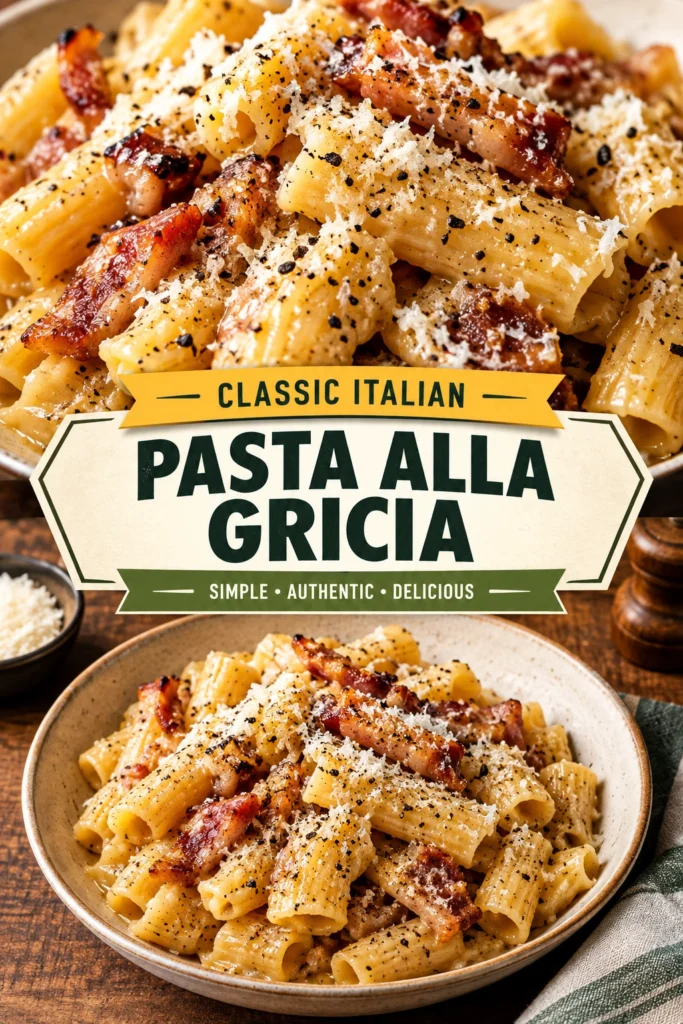
The smell of rendered pork fat mixing with sharp sheep’s milk cheese fills the kitchen as the sauce thickens. This dish is a study in minimalism, relying on just a few high-quality ingredients to create a rich, savory experience.
Pasta alla Gricia is essentially a Carbonara without the egg. It represents one of the four classic Roman pastas, focusing on the balance between salty pork and pungent cheese.
People love this recipe because it delivers an intense depth of flavor with very little active effort. It provides a bold alternative to lighter options like Greek Orzo Pasta Salad Fresh Mediterranean Delight
What makes this dish unique is the emulsion of pasta water and cheese, which creates a creamy texture without needing actual cream. The saltiness of the pork is tempered of the noodles.
Compared to store-bought pasta sauces, this version avoids preservatives and excessive sugar, relying instead on the natural fats of the guanciale. It tastes fresh, sharp, and authentic.
This recipe is suited for anyone who appreciates bold flavors and wants to master a traditional Italian technique. It is a sophisticated choice for a quick dinner.
The following guide covers everything needed to achieve a silky, non-clumpy sauce every time.
- ●Why You’ll Love This Recipe
- ●A Brief Background / Why This Recipe Works
- ●Perfect For Sophisticated Weeknight Dinners
- ●Main Ingredient Spotlight: Guanciale
- ●Secondary Ingredient Spotlight: Pecorino Romano
- ●Key Ingredients
- ●How to Make It
- ●Pro Tips
- ●Delicious Variations
- ●Best Ways to Serve
- ●Storage and Leftovers
- ●Frequently Asked Questions
- ●Why This Recipe Belongs in Your Weekly Rotation
- ●Final Thoughts
This dish offers a high reward for very little preparation time. It transforms a handful of pantry staples into a restaurant-quality meal.
- ●Rich flavor profile from the cured pork.
- ●Creamy consistency without using heavy cream.
- ●Very few ingredients to purchase.
- ●Quick cooking time for busy schedules.
- ●Authentic Roman technique in a home kitchen.
- ●Sharp, salty contrast from the aged cheese.
- ●Works well with various types of pasta.
- ●Requires only one pan and one pot.
- ●Naturally gluten-free if using alternative noodles.
It is a reliable go-to for when you want something comforting but refined.
A Brief Background / Why This Recipe Works |
Pasta alla Gricia is often called the ancestor of Carbonara and Amatriciana. It reflects the shepherd’s diet in the Lazio region, utilizing ingredients that were easy to preserve, such as cured pork and aged cheese.
The recipe works through the process of emulsification. When the starchy pasta water meets the rendered fat and finely grated cheese, they bind together into a stable sauce that clings to the pasta.
Using a pasta with ridges or a hollow center helps the sauce adhere better. The heat of the pasta gently melts the cheese without causing it to separate or clump.
This balance of fat, salt, and starch results in a cohesive dish that feels luxurious despite its simplicity.
Perfect For Sophisticated Weeknight Dinners |
Because it uses few ingredients, this meal is a strong choice for weeknights when you cannot spend hours in the kitchen. It feels more intentional than a standard buttered noodle dish but takes nearly the same amount of time.
For family dinners, it is a crowd-pleaser that appeals to those who enjoy savory, salty flavors. It provides a hearty dose of energy and satisfaction without being overly heavy.
While not a traditional holiday centerpiece, it works as a side dish for roasted meats or as a light starter for a multi-course Italian feast.
Main Ingredient Spotlight: Guanciale |
Guanciale is cured pork jowl and is the heart of this recipe. Unlike pancetta, which comes from the belly, guanciale has a higher fat-to-meat ratio and a more concentrated pork flavor.
The fat renders out slowly, creating a golden oil that coats the pasta. The meat itself becomes crisp on the edges while remaining chewy in the center, providing a necessary textural contrast to the soft noodles.
Secondary Ingredient Spotlight: Pecorino Romano |
Pecorino Romano is a hard, salty cheese made from sheep’s milk. Its sharpness is far more aggressive than Parmesan, which allows it to stand up to the rich fat of the guanciale.
The cheese acts as both a seasoning and a thickening agent. When whisked with pasta water, it transforms from a dry powder into a smooth, velvet-like coating.
Key Ingredients |
The beauty of this dish lies in the quality of its components. Avoid pre-grated cheeses to ensure a smooth melt.
- ●Guanciale — provides the primary savory base and rendered fat.
- ●Pecorino Romano — adds a salty, pungent tang and creates the sauce thickness.
- ●Pasta — carries the flavors and provides the starch needed for emulsification.
- ●Black Pepper — cuts through the richness with a woody heat.
- ●Pasta Water — the essential liquid that binds the cheese and fat.
How to Make It |
Following the correct sequence of temperature and timing prevents the cheese from clumping and ensures the pork is crisp.
- Boil the pasta: Cook your chosen noodles in a pot of boiling salted water. Use slightly less salt than usual because both the pork and cheese are very salty.
- Render the pork: While the pasta cooks, sauté diced guanciale in a large pan over medium heat. Cook until the fat has melted and the pieces are golden brown and crisp.
- Toast the pepper: Add freshly cracked black pepper to the pan with the pork. Letting the pepper heat in the fat releases its aromatic oils for a deeper flavor.
- Prepare the cheese paste: In a small bowl, mix finely grated Pecorino Romano with a small amount of warm pasta water. Stir until a thick, smooth paste forms.
- Combine pasta and pork: Transfer the pasta directly from the pot to the pan with the guanciale. Stir over medium heat for one minute so the noodles absorb the pork fat.
- Emulsify the sauce: Remove the pan from the heat entirely. Stir in the cheese paste and a splash more pasta water. Toss vigorously until the sauce becomes a glossy cream that coats every strand.
1Small adjustments in technique can make the difference between a grainy sauce and a silky one.
- ●2Remove from heat: Always take the pan off the burner before adding cheese. High heat causes Pecorino to separate and become rubbery.
- ●3Fine grate: Use the smallest holes on your grater. The finer the cheese, the faster it melts into the emulsion.
- ●4Save the water: Always reserve at least one cup of pasta water before draining. This is the only way to adjust the sauce consistency if it becomes too thick.
- ●5Under-cook slightly: Drain the pasta one minute before it reaches al dente. It will finish cooking in the pan with the fat and water.
- ●6Control the salt: Taste the rendered pork before adding any extra salt to the dish. The cure in the meat is often sufficient.
Delicious Variations |
While the traditional version is a masterpiece, these tweaks can adapt the dish to different tastes or available ingredients.
- ●Pancetta Swap: If guanciale is unavailable, use thick-cut pancetta for a similar, though slightly milder, pork flavor.
- ●Cheese Blend: Mix Pecorino with a bit of Parmesan to reduce the saltiness and add a nuttier tone.
- ●Spicy Kick: Add a pinch of red pepper flakes during the pork rendering stage for a subtle heat.
- ●Vegetable Addition: Stir in a handful of fresh ba the very end; the residual heat will wilt the leaves perfectly.
- ●Alternative Pasta: Try this with Rigatoni or Mezze Maniche to capture more sauce inside the tubes.
These changes allow you to customize the intensity of the dish while maintaining the core Roman identity.
Best Ways to Serve |
Presentation and side pairings help balance the richness of the pork and cheese.
- ●Serve in warmed bowls to keep the emulsion stable for longer.
- ●Top with an extra dusting of Pecorino and more cracked black pepper.
- ●Pair with a crisp arugula salad dressed in lemon vinaigrette.
- ●Serve alongside charred broccolini or sautéed rapini.
A light, acidic side dish is recommended to cleanse the palate between bites of the creamy pasta. A glass of dry white wine, such as Frascati or Pinot Grigio, also complements the saltiness well.
If you enjoy other Italian-inspired meals, you might also like Amazing Pasta Puttanesca Recipe Quick Italian Dish for a different flavor profile.
Storage and Leftovers |
Refrigerating
Store leftover pasta in an airtight container in the fridge for up to 3 days. Note that the sauce will thicken and lose its creaminess as it cools.
Reheating
Reheat in a pan over low heat with a tablespoon of water or milk. Stir constantly to help the cheese re-emulsify without breaking.
Freezing
Freezing is not recommended for this dish. The emulsion of cheese and fat typically separates upon thawing, resulting in a grainy texture.
Frequently Asked Questions |
- ●Q: Can I use bacon instead of guanciale?A: You can use bacon, but the flavor will be smokier and less pork-forward. To make it work, choose a thick-cut, unsmoked bacon if possible and render it slowly over medium heat to ensure the fat is fully released.
- ●Q: Why did my cheese clump into a ball?A: This happens when the cheese hits too much heat too quickly. To prevent this, remove the pan from the stove before adding the cheese and use a paste method cheese with pasta water first.
- ●Q: Which pasta shape is best for this recipe?A: Spaghetti and Rigatoni are the classic choices. Rigatoni is particularly effective because the hollow center traps the glossy sauce and bits of crisp pork, providing a more consistent flavor in every bite.
- ●Q: Do I need to add salt to the pasta water?A: Yes, but use significantly less than you would for other pastas. Because guanciale and Pecorino are both cured with high amounts of salt, over-salting the water can make the final dish taste briney.
- ●Q: Can I make this recipe vegan?A: You would need to substitute the guanciale with smoked tofu or tempeh and use a vegan parmesan alternative. However, achieving the same emulsion requires a starch-heavy pasta water and a high-quality vegan cheese that melts well.
Why This Recipe Belongs in Your Weekly Rotation |
Integrating this dish into your routine simplifies your dinner planning without sacrificing quality. It proves that you do not need a long list of ingredients to create a meal that feels special.
It serves as a great bridge between basic comfort food and gourmet cooking. Once you master the emulsion technique used here, you can apply it to other pasta dishes, like Luscious Simple Butter Parmesan Pasta Quick Comfort Food
The combination of salty pork and sharp cheese is timeless and satisfying. It is a reliable option that satisfies cravings for something rich and savory in under thirty minutes.
Final Thoughts |
Pasta alla Gricia is a masterful blend of guanciale and Pecorino Romano, tied together by a silky emulsion of pasta water. It is a dish that celebrates the beauty of a few high-quality ingredients handled with care.
Whether you are looking for a fast dinner or a way to impress guests with authentic Roman flavors, this recipe provides a consistent and bold result. It brings the essence of Italy into the home kitchen.
Gather your ingredients and experience the satisfying contrast of crisp pork and creamy cheese tonight.
Authentic Pasta alla Gricia: The Roman Pork and Pecorino Classic
- Total Time: 30 minutes
- Yield: 4 servings 1x
Description
A traditional Roman pasta dish featuring crispy guanciale and a sharp Pecorino Romano emulsion. This savory meal is rich, salty, and naturally creamy.
Ingredients
- 400g Spaghetti or Rigatoni
- 200g Guanciale, diced
- 100g Pecorino Romano, finely grated
- 1 tablespoon Black pepper, freshly cracked
- 1 cup Reserved pasta water
Instructions
- Bring a large pot of lightly salted water to a boil and cook pasta until one minute before al dente.
- While pasta cooks, place diced guanciale in a large skillet over medium heat. Sauté until the fat renders and the meat becomes golden brown and crisp.
- Stir freshly cracked black pepper into the skillet with the pork and fat for 30 seconds.
- In a small mixing bowl, combine the grated Pecorino Romano with a small splash of warm pasta water, stirring until a smooth paste forms.
- Reserve a cup of pasta water, then drain the noodles and add them directly to the skillet with the pork.
- Toss the pasta over medium heat for one minute to coat the noodles in the rendered fat.
- Remove the skillet from the heat completely. Stir in the Pecorino paste and additional pasta water as needed, tossing vigorously until a glossy, creamy sauce forms.
- Prep Time: 10 minutes
- Cook Time: 20 minutes
- Category: Dinner
- Method: Stovetop
- Cuisine: Italian