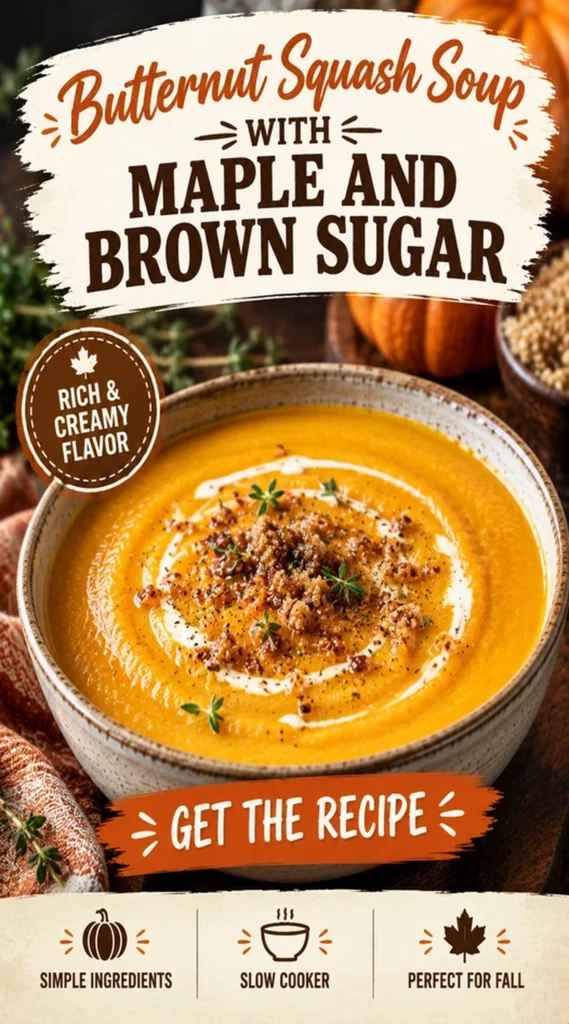
The moment the maple syrup and brown sugar hit the simmering squash, the aroma shifts from a simple vegetable scent to a rich, caramelized fragrance. This change signals that the savory base is transforming into something deeply comforting.
This is a creamy butternut squash soup enhanced with the woody sweetness of maple and the molasses depth of brown sugar. It moves beyond the standard puree types of sweetness against a savory vegetable foundation.
Many people appreciate this version because it avoids the blandness sometimes found in store-bought cans. The addition of brown sugar creates a complexity that mimics a slow-roasted flavor without requiring hours of oven time.
The texture is velvety and thick, providing a substantial feel that makes it a filling meal rather than just a starter. It pairs well with crusty sourdough or a crisp autumn salad.
Because it can be made in one large pot and blended quickly, it suits a busy cook who needs a nutritious meal without extensive cleanup. It is a great companion to other seasonal dishes like Cozy Maple Glazed Carrots With Brown Butter Easy Recipe For Fall Sides Best Side Dish
Whether you are hosting a holiday gathering or seeking a quiet Tuesday night dinner, this soup fits the occasion. Here is everything you need to get started.
- ●Why You’ll Love This Recipe
- ●A Brief Background on the Flavor Profile
- ●Perfect For Chilly Evenings and Meal Prep
- ●Butternut Squash Spotlight
- ●Maple and Brown Sugar Spotlight
- ●Key Ingredients
- ●How to Make It
- ●Pro Tips
- ●Variations
- ●Best Ways to Serve
- ●Storage and Leftovers
- ●Frequently Asked Questions
- ●Why This Recipe Belongs in Your Weekly Rotation
- ●Final Thoughts
This soup balances a few simple ingredients to create a sophisticated taste that feels like it took much longer to prepare than it actually did.
- ●The combination of maple and brown sugar creates a layered sweetness.
- ●It uses a single pot for most of the cooking process.
- ●The creamy texture is achieved without needing heavy creams.
- ●It utilizes seasonal produce at its peak flavor.
- ●The recipe is naturally hearty and filling.
- ●It works as both a light lunch or a main course.
- ●The flavors intensify after sitting overnight.
- ●It provides a warming sensation ideal for cold weather.
- ●The ingredients are accessible at any standard grocery store.
- ●It pairs naturally with toasted seeds or nuts.
This soup brings a touch of autumn warmth to the table with every spoonful.
A Brief Background on the Flavor Profile |
Butternut squash has a naturally mild, nutty sweetness. When simmered with aromatics like onion and garlic, it creates a savory base. However, adding maple syrup introduces a floral, woody note that complements the squash’s earthiness.
Brown sugar adds a different dimension. Because it contains molasses, it provides a darker, more caramelized undertone. This prevents the soup from tasting like a dessert and instead keeps it firmly in the savory category with a hint of sweetness.
The balance of these sugars against salt and black pepper creates a rounded taste. It is similar in spirit to a Heavenly Cozy Butternut Squash Casserole Recipe Delight, but in a liquid, comforting form.
This approach ensures the soup tastes rich and complex, avoiding the one-dimensional flavor often found in basic vegetable purees.
Perfect For Chilly Evenings and Meal Prep |
On busy weeknights, this soup serves as a reliable meal. Since it stores well, you can make a large batch on Sunday and have lunches ready for the entire work week. It reheats without losing its creamy consistency.
For family dinners, it is an approachable dish that appeals to both adults and children. The mild sweetness makes it an inviting option for picky eaters who might otherwise avoid vegetables.
During the holidays, this soup functions as a sophisticated appetizer. It clears the palate and warms up guests before a larger meal, such as a dinner featuring Crispy Brown Butter Lemon Herb Salmon Skillet The 20 Minute Masterclass Easy Salmon Dinner
Butternut Squash Spotlight |
Butternut squash is the foundation of this dish because of its dense, creamy flesh. Unlike some other winter squashes, it blends into a very smooth consistency without leaving behind a grainy texture. It provides a natural thickness that reduces the need for flour or cornstarch thickeners.
Beyond texture, the squash offers a subtle sweetness and a bright orange color that makes the dish visually appealing. It is packed with nutrients and provides a satisfying weight to the meal.
Maple and Brown Sugar Spotlight |
Maple syrup is used here for its distinct aromatic quality. It adds a depth that white sugar cannot replicate, bringing a hint of the forest and autumn air into the pot. It blends seamlessly with the squash to enhance its natural sugars.
Brown sugar acts as the grounding agent. The molasses within the sugar adds a rich, toasted flavor that cuts through the brightness of the maple syrup. Together, these two sweeteners create a complex profile that mirrors the taste of roasted vegetables.
Key Ingredients |
These components work together to balance sweetness, salt, and creaminess.
- ●Butternut Squash — provides the creamy body and mild sweetness; can be substituted with pumpkin.
- ●Maple Syrup — adds a floral, woody sweetness; can be replaced with honey if needed.
- ●Brown Sugar — introduces a molasses-rich depth; light brown sugar works well here.
- ●Onion — provides a savory, aromatic base; shallots offer a milder alternative.
- ●Garlic — adds a sharp, pungent contrast to the sugars; roasted garlic can be used for a mellower taste.
- ●Vegetable Broth — the liquid base that integrates all flavors; chicken broth is a savory alternative.
- ●Butter — adds richness and a silky mouthfeel; olive oil works for a dairy-free version.
- ●Salt and Black Pepper — essential for balancing the sweetness and enhancing the squash.
How to Make It |
Follow these steps to ensure the squash is fully cooked and the flavors are well integrated.
- Sauté the aromatics: Melt butter in a large pot over medium heat. Add diced onion and cook until translucent to build a flavor base without browning the onions too deeply, which could introduce a bitter taste.
- Add garlic: Stir in the minced garlic and cook for about one minute. Adding garlic after the onion prevents it from burning, which would ruin the sweetness of the soup.
- Brown the squash: Add the cubed butternut squash to the pot. Stir frequently for 5 to 7 minutes; this slight browning helps develop a deeper flavor before the liquid is added.
- Simmer with broth: Pour in the vegetable broth until the squash is covered. Bring to a boil, then reduce heat to a simmer. Let it cook until the squash is tender when pierced with a fork, typically 15 to 20 minutes.
- Incorporate sweeteners: Stir in the maple syrup and brown sugar. Adding these now allows the sugars to meld with the squash without scorching on the bottom of the pot.
- Blend until smooth: Use an immersion blender directly in the pot or transfer the mixture to a stand blender in batches. Blend until the soup is completely velvety. Avoid overfilling the blender to prevent hot liquid from splashing.
- Final Seasoning: Taste the soup and add salt and black pepper. The salt is critical here to balance the maple and brown sugar so the soup tastes savory rather than like a dessert.
1Use these techniques to refine the texture and taste of your soup.
- ●2Cube evenly: Cut the squash into uniform pieces so they all cook at the same rate and avoid having some chunks mushy while others are hard.
- ●3Use room temperature broth: Adding ice-cold broth to a hot pot can cause the temperature to drop sharply, extending the cooking time.
- ●4Strain for extreme smoothness: If you want a restaurant-style finish, pass the blended soup through a fine-mesh sieve to remove any remaining fibers.
- ●5Control the heat: Keep the simmer low once the sugars are added to prevent the bottom from sticking or caramelizing too much.
- ●6Balance with acid: If the soup feels too sweet, a small squeeze of lemon juice or a teaspoon of apple cider vinegar can brighten the flavor.
Variations |
You can adapt this recipe to suit different dietary needs or taste preferences.
- ●Creamy Coconut: Replace the butter with coconut oil and stir in half a can of coconut milk at the end for a tropical, dairy-free twist.
- ●Spicy Autumn: Add a pinch of cayenne pepper or smoked paprika to create a heat contrast with the maple syrup.
- ●Apple Infusion: Sauté a peeled and diced apple along with the onion for an extra layer of fruity sweetness.
- ●Curried Squash: Stir in a tablespoon of yellow curry powder during the sauté step for a savory, aromatic version.
- ●Nutty Blend: Blend in a handful of toasted hazelnuts or cashews for added thickness and a rich, nutty finish.
These changes allow the soup to fit into various meal themes, from healthy lunches to festive dinners.
Best Ways to Serve |
The presentation and accompaniments can elevate the overall dining experience.
- ●Drizzle a small amount of heavy cream or coconut milk in a swirl on top.
- ●Sprinkle with toasted pumpkin seeds (pepitas) for a necessary crunch.
- ●Garnish with a pinch of fresh thyme or parsley for a pop of color.
- ●Serve with a side of toasted sourdough bread rubbed with a raw garlic clove.
- ●Pair with a Roasted Butternut Squash Salad A Flavorful Delight Healthy Autumn Side Dish for a themed squash feast.
For a more formal setting, serve the soup in small bowls or espresso cups as an amuse-bouche. For a family meal, a large tureen in the center of the table works best.
If you are looking for other squash ideas, Baked Spaghetti Squash With Goat Cheese And Arugula Healthy Fall Dinner Idea is another great option for the season.
Storage and Leftovers |
Refrigerating
Store the soup in an airtight container in the refrigerator for up to 5 days. The flavors often meld and improve after a day of resting.
Reheating
Warm the soup over medium-low heat on the stove. If the soup has thickened too much in the fridge, stir in a splash of vegetable broth or water to return it to its original consistency.
Freezing
Freeze the soup in freezer-safe containers or bags for up to 3 months. Thaw in the refrigerator overnight before reheating on the stove.
Frequently Asked Questions |
- ●Q: Can I use a pre-cut bag of butternut squash?A: Yes, using pre-cut squash is a great way to save time. Just ensure the pieces are roughly the same size so they cook evenly. Check the bag for any preservatives or additives that might alter the taste of the soup.
- ●Q: My soup is too sweet, how do I fix it?A: If the maple and brown sugar dominate, add a pinch more salt or a teaspoon of apple cider vinegar. The acidity cuts through the sweetness and brings the savory notes of the onion and garlic back to the forefront.
- ●Q: Do I have to peel the butternut squash?A: Yes, the skin of the butternut squash is tough and waxy. It does not blend smoothly and will leave the soup with an unpleasant texture and a bitter taste. Always peel the squash before cubing it.
- ●Q: What is the best way to blend the soup if I don’t have an immersion blender?A: You can use a standard blender, but be careful with hot liquids. Pour the soup in small batches and leave the lid slightly ajar with a towel over it to allow steam to escape and prevent the lid from popping off.
- ●Q: Can I substitute the vegetable broth for water?A: While you can use water, the soup will lack the depth of flavor provided . If you use water, increase the amount of salt and perhaps add a teaspoon of soy sauce or nutritional yeast for added savoriness.
- ●Q: Is this recipe suitable for vegans?A: To make this vegan, simply replace the butter with a plant-based butter alternative or olive oil. Ensure your vegetable broth is certified vegan. All other ingredients, including the maple syrup and brown sugar, are typically vegan-friendly.
Why This Recipe Belongs in Your Weekly Rotation |
This soup provides a bridge between the lightness of summer and the heaviness of winter. It uses wholesome ingredients that provide satiety without making you feel overly full, making it a versatile choice for any meal of the day.
The preparation is straightforward, and the cleanup is minimal. Because it stores so well, it reduces the need for mid-week takeout or processed snacks. It is a reliable way to get a serving of vegetables into your diet while enjoying a flavor profile that feels like a treat.
Final Thoughts |
This butternut squash soup blends the earthy essence of winter vegetables with the rich, toasted notes of maple and brown sugar. It results in a velvety texture and a balanced taste that is both savory and sweet.
Making this dish allows you to bring the warmth of the season into your kitchen with very little effort. It is a comforting meal that provides nourishment and a sense of coziness during the colder months.
Gather your ingredients and let the aroma of simmering squash and maple fill your home tonight.
Butternut Squash Soup with Maple and Brown Sugar
- Total Time: 45 minutes
- Yield: 4 servings 1x
Description
A velvety autumn soup that balances the earthiness of butternut squash with the deep, woody sweetness of maple syrup and brown sugar.
Ingredients
- 4 cups butternut squash, peeled and cubed
- 1 tablespoon butter
- 1 small onion, diced
- 3 cloves garlic, minced
- 4 cups vegetable broth
- 2 tablespoons maple syrup
- 1 tablespoon brown sugar
- 1/2 teaspoon salt
- 1/4 teaspoon black pepper
Instructions
- Melt butter in a large pot over medium heat. Add diced onion and cook until translucent.
- Stir in minced garlic and cook for 1 minute until fragrant.
- Add cubed butternut squash and cook for 5-7 minutes, stirring occasionally.
- Pour in vegetable broth. Bring to a boil, then reduce heat and simmer for 15-20 minutes until squash is tender.
- Stir in maple syrup and brown sugar, simmering for another 2-3 minutes.
- Use an immersion blender to blend the soup until completely smooth.
- Season with salt and black pepper to taste. Serve warm.
- Prep Time: 15 minutes
- Cook Time: 30 minutes
- Category: Soup
- Method: Simmering and Blending
- Cuisine: American