The Story Behind the Tart |
I first encountered this specific combination during a rainy October visit to a small bakery in Lyon. The owner, a stern man named Marc, insisted that the sharpness of the cranberry was the only thing capable of cutting through the dense richness of a traditional French caramel. He handed me a slice on a wax paper square, and the first bite was a revelation of flavor equilibrium.
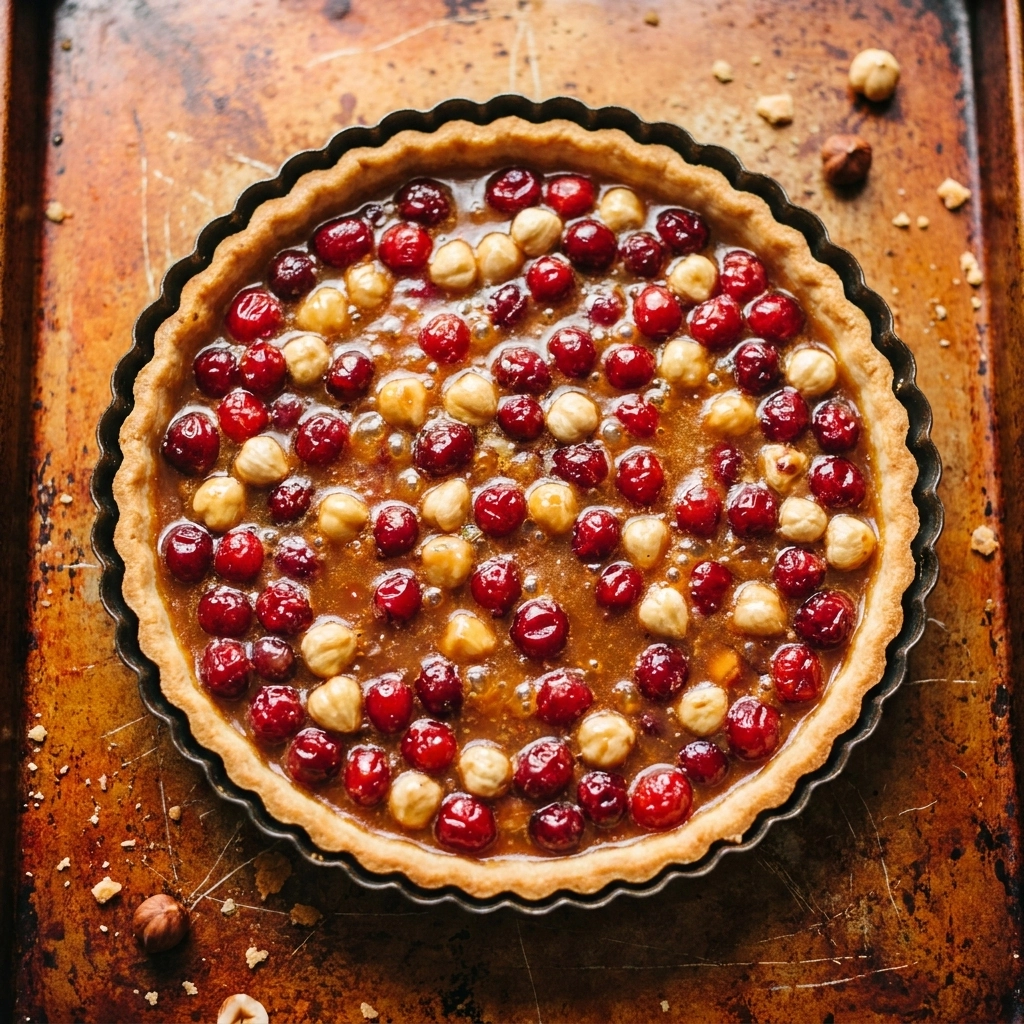
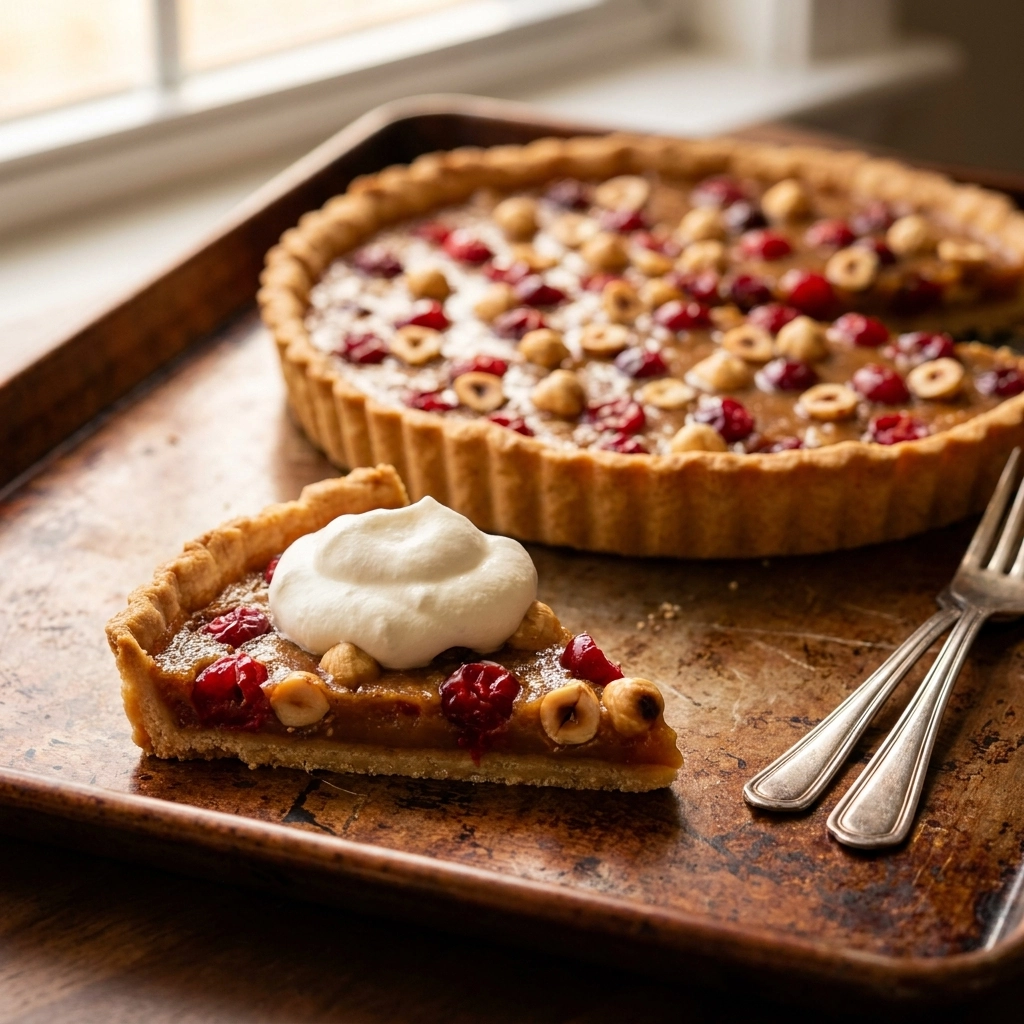
The magic lies in the aggressive texture contrast. You get the shatter-crisp snap of the shortcrust pastry, followed , sticky pull of the caramel. Then, the burst of a whole cranberry provides a juicy, acidic pop that cleanses the palate. It is a calculated architectural feat of baking that keeps you coming back for more.
- ●The bold balance of tart cranberries against deep, burnt sugar caramel.
- ●Professional-grade texture that mimics high-end patisserie.
- ●A visually stunning presentation that works for any formal dinner.
- ●The roasted hazelnut addition provides a necessary earthy depth.
- ●It stays fresh for several days, making it ideal for prep-ahead hosting.
Essential Ingredients |
All-purpose flour is the foundation of global baking, yet it contains proteins that create the structural gluten network. It provides the necessary stability for the tart shell.
Unsalted butter comes from cream that has been churned to separate solids, acting as the primary fat source. Cold butter is critical for creating a flaky, tender crust.
Fresh cranberries are actually closely related to the blueberry but possess a much higher concentration of organic acids. They provide the essential tartness to balance the sugar.
Granulated sugar is a crystalline sucrose that undergoes caramelization when heated past 320°F. It transforms from a sweet powder into a complex, bitter-sweet syrup.
Hazelnuts were once known as Coryls in ancient Rome and are prized for their high oil content. They add a toasted, woody crunch to the final layer.
Heavy cream consists of milk fat globules suspended in water, which stabilizes the caramel. It prevents the sugar from recrystallizing into a hard candy.
 Let’s Make it Together |
- Start flour and cold butter in a food processor until it looks like coarse sand. Add a pinch of salt and a splash of ice water. Pulse again just until the dough clumps together. Wrap it up and let it chill in the fridge for an hour.
- Preheat your oven to 375°F. Roll out that chilled dough and press it firmly into your tart pan. Prick the bottom with a fork. Bake it for 15 minutes, then add weights and bake for another 10 until it’s golden.
- Toss your fresh cranberries with a tablespoon of sugar and a squeeze of lemon. Scatter them across the bottom of your pre-baked shell. Pop it back in the oven for 5 minutes just to soften the berries.
- Grab a heavy-bottomed pot and melt your sugar over medium heat. Don’t stir it. Just swirl the pan until the sugar turns a deep amber color.
- Slowly whisk in the heavy cream. Be careful here; it will bubble up violently. Stir it until smooth, then pour this liquid gold over the cranberries.
- Fill the gaps with toasted hazelnut halves. Put the whole thing back in the oven for 5 to 8 minutes. You want the caramel to bubble and the nuts to set.
Never stir the sugar while it is melting for the caramel.
Use a timer for the crust to avoid over-browning the edges.
Ensure your butter is truly frozen before hitting the processor.
Do not overwork the dough or the crust will be tough.
Allow the tart to cool completely before slicing into it.
Perfecting the Cooking Process |
The critical window for this recipe is the caramelization stage. You are aiming for a temperature of approximately 338°F to 350°F. At this heat, the sucrose molecules break down and reform into complex polymers that create the signature nutty flavor. If you stop at 300°F, the tart will be cloyingly sweet. If you push past 360°F, the caramel becomes acrid and burnt.
Temperature control in the crust is equally vital. Keep your ingredients at 40°F or lower. When the butter melts before hitting the oven, it fuses with the flour, resulting in a dense, cookie-like texture instead of a flaky pastry. The goal is to have small, discrete pockets of fat that steam during baking to create those elusive air gaps.
Timing the final bake is a game of seconds. The caramel needs just enough heat to fuse with the cranberries without evaporating the moisture from the cream. Eight minutes is usually the limit. Overcooking the cream-based caramel will lead to separation, where the fat splits from the sugar and leaves an oily film on top.
Add Your Touch |
Try adding a pinch of Maldon sea salt to the caramel for a salted-caramel variation. This heightens the fruitiness of the cranberries and adds a modern, savory edge to the dessert.
Swap the hazelnuts for toasted pecans or walnuts if you prefer a more buttery flavor. You can also add a teaspoon of orange zest to the crust to lean into the traditional autumn flavor profile.
Storing & Reheating |
Store the tart in an airtight container in the refrigerator for up to four days. Keep it away from strong-smelling foods like onions, as the high fat content in the crust absorbs odors.
To reheat, place a slice on a baking sheet in a 300°F oven for 5 minutes. This restores the crunch of the hazelnuts and softens the caramel without melting it completely.
1Use a pastry brush to apply a thin layer of egg wash to the crust.
2Always weigh your ingredients with a digital scale for precision.
3Deglaze your caramel pot with water to clean it easily later.
4Chill your tart pan in the freezer before adding the dough.
5Use a serrated knife to slice the tart for cleaner edges.
FAQ |
- ●Q: Can I use frozen cranberries instead of fresh?A: Yes, you can use frozen berries, but you must thaw them completely and pat them dry with a paper towel first. If you add them frozen, the excess moisture will release during baking and make your crust soggy.
- ●Q: Why did my caramel crystallize and turn grainy?A: Crystallization happens when a single sugar crystal triggers a chain reaction. To prevent this, avoid stirring the sugar with a spoon at the start; instead, swirl the pan or use a whisk only once the sugar has fully melted.
- ●Q: How do I stop the tart crust from shrinking down the sides?A: Shrinking is caused contracting. To prevent this, make sure you don’t overwork the dough and let it chill thoroughly for at least an hour before baking to relax the gluten structure.
- ●Q: Can I make this recipe vegan?A: You can substitute the butter with chilled coconut oil and the heavy cream with a thick coconut cream. However, be aware that the flavor will shift toward a tropical profile and the texture will be slightly softer.
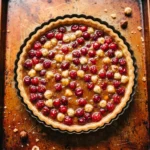
Cranberry, Caramel and Hazelnut Tart: A Study in Contrasts
- Total Time: 2 hours 15 minutes
- Yield: 1 9-inch tart 1x
Description
A sophisticated tart featuring a crisp buttery crust, tart cranberries, and a rich hazelnut caramel topping.
Ingredients
- 1 1/2 cups all-purpose flour
- 1/2 cup chilled unsalted butter, cubed
- 1 tbsp sugar
- Pinch of salt
- 2–3 tbsp ice water
- 2 cups fresh cranberries
- 1 cup granulated sugar
- 1/2 cup heavy cream
- 1/2 cup toasted hazelnut halves
- 1 tsp lemon juice
Instructions
- Pulse flour, salt, and cold butter in a processor until crumbly. Add water and pulse until dough forms.
- Chill dough for 60 minutes. Roll out and fit into a tart pan.
- Blind bake at 375F for 15 mins, add weights, and bake 10 mins more.
- Toss cranberries with sugar and lemon juice; spread in the shell and bake for 5 mins.
- Melt sugar in a pot until amber, then whisk in heavy cream until smooth.
- Pour caramel over berries, top with hazelnuts, and bake for 5-8 mins.
- Prep Time: 90 minutes
- Cook Time: 45 minutes
- Category: Dessert
- Method: Baking
- Cuisine: French-inspired