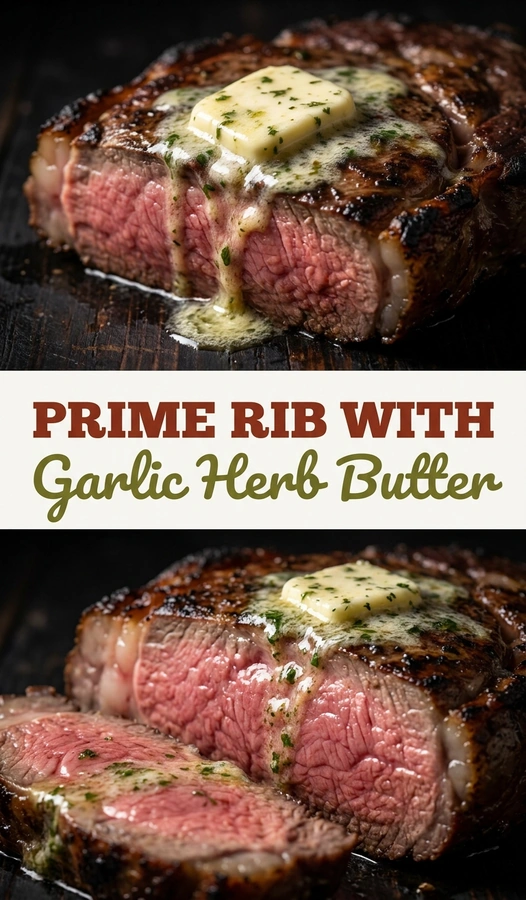
A thick, succulent slice of prime rib topped with melting garlic herb butter creates a visually stunning and aromatic center-piece. The contrast between the seared outer crust and the tender, pink center defines a high-quality roast.
This recipe focuses on a slow-roasting method that preserves moisture while building deep flavor. It transforms a premium cut of beef into a restaurant-style experience at home.
Many home cooks find the prospect of roasting a large piece of beef intimidating, but this approach simplifies the process. It relies on a steady temperature and a precise internal reading.
The addition of a compound butter provides a layer of richness that store-bought pre-marinated meats cannot replicate. The butter baste keeps the meat moist during the final stages of cooking.
This dish is designed for those who want to impress guests without spending the entire evening in the kitchen. Most of the work happens in the preparation phase.
The following guide provides the steps and tips needed to achieve a consistent medium-rare result every time.
- ●Why You’ll Love This Recipe
- ●A Brief Background / Why This Recipe Works
- ●Perfect For Holiday Feasts and Special Occasions
- ●Prime Rib Spotlight
- ●Garlic and Herb Spotlight
- ●Key Ingredients
- ●How to Make It
- ●Pro Tips
- ●Delicious Variations
- ●Best Ways to Serve
- ●Storage and Leftovers
- ●Frequently Asked Questions
- ●Why This Recipe Belongs in Your Weekly Rotation
- ●Final Thoughts
This roast delivers a level of luxury and flavor that makes any meal feel like a celebration. Here are the specific reasons this method stands out:
- ●The compound butter creates a savory, aromatic crust that penetrates the meat.
- ●Slow-roasting ensures the beef stays tender and juicy from edge to edge.
- ●It uses a simple set of ingredients that highlight the natural quality of the beef.
- ●The preparation is straightforward, allowing for more time with guests.
- ●It provides a consistent result that avoids the common pitfall of overcooking.
- ●The garlic and herbs provide a classic flavor profile that appeals to most palates.
- ●Leftovers are versatile and can be used for high-end sandwiches the next day.
- ●It pairs perfectly with a wide range of side dishes, from root vegetables to greens.
Combining high-heat searing with a gentle roast produces a professional finish that is achievable in any standard oven.
A Brief Background / Why This Recipe Works |
Prime rib is prized for its high fat content and marbling. As the beef cooks, the intramuscular fat melts, which bastes the meat from the inside and prevents it from drying out.
The technique used here emphasizes a temperature gradient. Starting with a high-heat sear locks in a savory crust, while the subsequent lower temperature allows the heat to penetrate the thick center without overcooking the exterior.
Using a compound butter instead of a liquid marinade allows the flavors to sit on the surface and melt slowly. This prevents the exterior from becoming soggy and ensures the herbs remain fragrant.
The resting period is the most critical part of the process. It allows the muscle fibers to relax and the juices to redistribute, which means the meat stays moist when sliced.
Perfect For Holiday Feasts and Special Occasions |
This roast is a natural choice for Christmas, Easter, or anniversary dinners. Its impressive appearance and rich taste make it a focal point for large family gatherings.
For those hosting dinner parties, this recipe is ideal because the meat can be prepped in advance. Once it is in the oven, the cook can focus on sides like Juicy Garlic Butter Parmesan Smashed Potatoes Recipe
While typically reserved for holidays, it also works for an upscale Sunday dinner. The effort put into the roast makes a standard weekend meal feel significantly more special.
Prime Rib Spotlight |
Prime rib, usually sourced from the rib primal, is chosen for its exceptional tenderness. The high degree of marbling means the beef contains small deposits of fat that break down into a rich, buttery flavor during the roasting process.
Unlike leaner cuts, prime rib can withstand a longer time in the oven without becoming tough. This makes it the ideal candidate for slow-roasting, as it maintains a lush, velvety texture even in the larger center portions.
Garlic and Herb Spotlight |
Garlic acts as the aromatic foundation of the crust. When roasted, the pungent raw flavor of garlic mellows into a sweet, nutty profile that complements the richness of the beef.
Fresh herbs like rosemary and thyme add earthy, woody notes. These herbs cut through the heaviness of the fat, providing a balanced flavor that prevents the dish from feeling too oily.
Combining these with butter creates a vehicle that carries the flavor deep into the crevices of the meat. The butter also acts as a heat conductor, helping to brown the surface of the beef more evenly.
Key Ingredients |
Selecting high-quality ingredients is essential for a roast of this caliber. Each component plays a specific role in the final taste:
- ●Prime Rib Roast — Provides the rich, beefy foundation and essential marbling for tenderness.
- ●Unsalted Butter — Serves as the base for the herb mixture and adds a creamy richness to the crust.
- ●Fresh Garlic — Adds a sharp, savory aromatic quality that intensifies during roasting.
- ●Fresh Rosemary — Offers a piney, woody fragrance that pairs classically with beef.
- ●Fresh Thyme — Provides subtle, earthy notes that round out the herb profile.
- ●Kosher Salt — Draws out moisture for a better sear and deeply seasons the interior of the meat.
- ●Black Pepper — Adds a mild heat and woody spice to the outer crust.
- ●Olive Oil — Helps the salt and pepper adhere and increases the heat conductivity for the sear.
How to Make It |
Precision and patience are the keys to a perfect prime rib. Follow these steps to ensure a juicy, medium-rare roast.
- Prepare the meat: Remove the roast from the refrigerator at least two hours before cooking. Bringing the beef to room temperature ensures it cooks evenly; otherwise, the center may remain raw while the outside overcooks.
- Season the surface: Pat the roast dry with paper towels. Rub the entire surface with olive oil, then apply a generous coating of salt and black pepper. Press the seasoning into the meat so it doesn’t fall off during the sear.
- Sear the exterior: Heat a large oven-safe skillet over medium-high heat. Brown the meat on all sides until a deep brown crust forms. Avoid overcrowding the pan; sear in batches if necessary to prevent the meat from steaming in its own juices.
- Create the herb butter: Mash softened butter with minced garlic, chopped rosemary, and chopped thyme. Mix until the herbs are evenly distributed. This butter will be applied as the meat finishes roasting.
- Slow roast: Transfer the roast to a roasting pan. Place it in a preheated oven at a low temperature. Roast until the internal temperature reaches 120F for medium-rare. Using a meat thermometer is the only way to avoid guessing and overcooking.
- Apply the butter: Once the meat reaches the target temperature, increase the oven heat to high. Spread the garlic herb butter over the top of the roast and broil for 3-5 minutes until the butter is bubbling and slightly browned.
- Rest the beef: Transfer the roast to a cutting board and tent it loosely with foil. Let it rest for at least 20 to 30 minutes. This allows the juices to set, preventing them from running out and leaving the meat dry when sliced.
1Small adjustments in technique can lead to a significantly better result. Consider these professional tips for your next roast:
- ●2Use a probe thermometer: Leave a digital probe in the thickest part of the meat throughout the cooking process to monitor the temperature in real-time.
- ●3Dry brine the meat: Salt the roast 24 hours in advance and leave it uncovered in the fridge. This creates a drier surface for a superior crust.
- ●4Avoid aluminum foil wraps: Do not wrap the roast tightly in foil during the roast, as this steams the meat and prevents the crust from developing.
- ●5Slice against the grain: Identify the direction of the muscle fibers and slice perpendicular to them to ensure every bite is as tender as possible.
- ●6Check your oven calibration: Oven thermostats can be inaccurate. Use an independent oven thermometer to verify the heat is actually at the target temperature.
Delicious Variations |
While the classic garlic herb profile is a favorite, you can adapt the flavors to suit different preferences:
- ●Blue Cheese Butter: Fold crumbled gorgonzola into the herb butter for a pungent, salty kick.
- ●Red Wine Reduction: Serve the roast with a side of red wine jus instead of just butter for a deeper, more acidic contrast.
- ●Dijon Crust: Brush a thin layer of Dijon mustard on the beef before applying the herb butter for a tangy zest.
- ●Horseradish Twist: Mix prepared horseradish into the butter mixture to provide a sharp, clearing heat.
- ●Smoked Paprika: Add a teaspoon of smoked paprika to the salt rub for a subtle campfire flavor.
These variations allow you to tailor the roast to specific tastes while maintaining the core roasting technique.
Best Ways to Serve |
A meal of this magnitude requires sides that balance the richness of the beef. Start with something bright or earthy to cleanse the palate.
- ●Roasted root vegetables like Heavenly Honey Garlic Butter Roasted Carrots Recipe
- ●Creamy mashed potatoes or a cheesy gratin.
- ●Sautéed spinach or roasted asparagus with lemon.
- ●A crisp wedge salad with blue cheese dressing and cherry tomatoes.
- ●Warm, crusty Ultimate Garlic Herb Dutch Oven Bread Recipe Tasty to soak up the juices.
Present the meat on a large wooden carving board. Arrange the sliced pieces in a fan shape and pour any remaining pan juices over the top for a professional presentation.
For a more casual approach, serve the prime rib as an open-faced sandwich on toasted sourdough with a side of horseradish cream.
Storage and Leftovers |
Refrigerating
Store leftover prime rib in an airtight container in the refrigerator for up to 4 days. To maintain quality, keep the sliced meat in a single layer to prevent it from becoming mushy.
Reheating
Avoid the microwave, as it will overcook the beef and make it rubbery. Instead, heat slices in a 250F oven on a baking sheet, adding a small pat of butter on top, for about 10-15 minutes until just warmed through.
Freezing
Freeze the roast or individual slices in vacuum-sealed bags for up to 3 months. Thaw slowly in the refrigerator for 24 hours before reheating to preserve the texture.
Frequently Asked Questions |
- ●Q: How do I know when the prime rib is perfectly medium-rare?A: Use a digital meat thermometer to check the internal temperature in the thickest part of the roast. Remove the beef from the oven when it hits 120F to 125F, as the temperature will rise another 5 to 10 degrees during the resting process.
- ●Q: Can I use a different cut of beef for this recipe?A: While prime rib is ideal, you can use a top sirloin roast or a chuck roast. However, these cuts have different fat content and cooking times, so you will need to adjust the roasting duration and likely increase the resting time.
- ●Q: What is the best way to prevent the roast from drying out?A: The most effective method is slow-roasting at a low temperature and ensuring a proper resting period. The compound butter also provides a protective layer of fat that helps seal in moisture during the final high-heat phase.
- ●Q: Why did my roast shrink significantly during cooking?A: All meat shrinks as muscle fibers contract and moisture evaporates. This is a normal part of the process. Using a higher quality, well-marbled cut helps minimize excessive shrinkage compared to leaner meats.
- ●Q: Do I have to sear the meat first?A: Searing is not strictly required for safety, but it is essential for flavor. The Maillard reaction creates a complex, savory crust that adds depth to the dish and provides a visual contrast to the pink interior.
- ●Q: Can I make the herb butter in advance?A: Yes, you can prepare the compound butter up to a week ahead of time. Store it in the refrigerator in a sealed container or roll it into a log using parchment paper and freeze it for later use.
Why This Recipe Belongs in Your Weekly Rotation |
While prime rib is often viewed as a holiday-only dish, incorporating it into your rotation elevates the standard dinner experience. It teaches the fundamentals of temperature control and meat preparation that apply to almost all roasting.
The versatility of the leftovers makes this a practical choice for a busy week. A single large roast provides a main meal for one night and high-quality protein for lunches throughout the following week.
Investing the time into a high-quality roast reduces the need for expensive restaurant outings. You can achieve the same, if not better, results the quality of the cut and the precision of the cook.
Final Thoughts |
Prime rib with garlic herb butter is a masterclass in simplicity and luxury. By combining a slow roast with a flavorful butter crust, you create a dish that is both comforting and sophisticated.
Whether you are hosting a formal dinner or simply want to treat your family to something exceptional, this recipe provides a reliable path to success. It removes the guesswork and replaces it with a proven technique.
Gather your ingredients, set your timer, and prepare to enjoy a roast that will be remembered long after the meal is over.
Prime Rib with Garlic Herb Butter
- Total Time: 3 hours 30 minutes
- Yield: 6 servings 1x
Description
A succulent, slow-roasted prime rib topped with a rich compound butter of garlic, rosemary, and thyme. This method ensures a tender, medium-rare center with a savory, browned crust.
Ingredients
- 4–5 lb Prime Rib Roast
- 1/2 cup unsalted butter, softened
- 4 cloves garlic, minced
- 1 tbsp fresh rosemary, finely chopped
- 1 tbsp fresh thyme, finely chopped
- 2 tbsp olive oil
- 2 tbsp kosher salt
- 1 tbsp coarse black pepper
Instructions
- Bring the roast to room temperature for 2 hours before cooking.
- Preheat oven to 250F (120C).
- Pat the beef dry with paper towels, rub with olive oil, and season generously with salt and pepper on all sides.
- Heat a large oven-safe skillet over medium-high heat and sear the meat on all sides until browned.
- Transfer the roast to a roasting pan and cook at 250F until a meat thermometer reads 120F for medium-rare.
- While roasting, mix softened butter, minced garlic, rosemary, and thyme into a paste.
- Increase oven temperature to 500F (260C) or turn on the broiler. Spread the herb butter over the roast and cook for 3-5 minutes until bubbling.
- Remove from oven and let the roast rest on a carving board for 20-30 minutes before slicing.
- Prep Time: 30 minutes
- Cook Time: 3 hours
- Category: Dinner
- Method: Roasting
- Cuisine: American