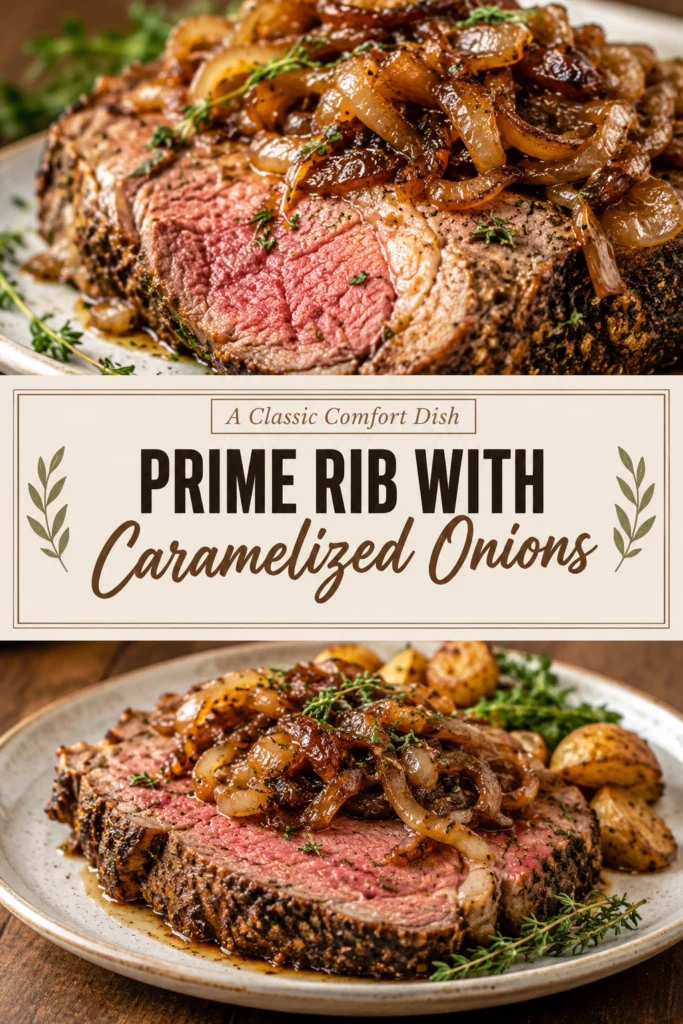
The scent shifts from raw beef to a deep, toasted aroma the moment the crust begins to brown in the oven. It is the signal that a few hours of patience are about to pay off.
This recipe combines a slow-roasted prime rib with a heap of jammy, slow-cooked onions. The result is a luxurious meal that balances rich fat with concentrated sweetness.
Many home cooks find prime rib intimidating, but the process is straightforward when you focus on internal temperature. The caramelized onions add a sophisticated layer that elevates the beef beyond a basic roast.
Unlike store-bought pre-seasoned roasts, this version allows you to control the salt and sweetness. You get a cleaner beef flavor paired with homemade onion preserves.
It is an ideal choice for those who want a show-stopping center-piece without spending the entire day standing over the stove. Most of the work happens in the oven or in a simmering pan.
The final dish offers a striking contrast between the firm, seared crust of the beef and the soft, silky texture of the onions.
Here is everything you need to master this roast.
- ●Why You’ll Love This Recipe
- ●A Brief Background on the Method
- ●Perfect For Holiday Gatherings and Special Occasions
- ●Prime Rib Ingredient Spotlight
- ●Onion and Aromatics Spotlight
- ●Key Ingredients
- ●How to Make It
- ●Pro Tips
- ●Delicious Variations
- ●Best Ways to Serve
- ●Storage and Leftovers
- ●Frequently Asked Questions
- ●Why This Recipe Belongs in Your Weekly Rotation
- ●Final Thoughts
This dish transforms a standard roast into a gourmet experience the harmony of salt, fat, and sugar.
- ●The slow-roasting method keeps the center tender and juicy.
- ●Caramelized onions provide a natural sweetness that cuts through the richness of the beef.
- ●A high-heat sear creates a salty, mahogany crust.
- ●The recipe uses simple pantry staples to enhance a premium cut of meat.
- ●It requires minimal active effort once the roast is in the oven.
- ●The onions can be prepared in advance to save time during the meal.
- ●Internal temperature tracking removes the guesswork from the cooking process.
- ●It scales easily for small family dinners or large crowds.
- ●The leftovers are exceptional for high-end sandwiches the next day.
It is a reliable way to serve a luxury meal that tastes professional but remains accessible.
A Brief Background on the Method |
Prime rib is prized for its marbling, which provides the flavor and moisture needed for long roasting times. When the heat penetrates the meat, these fats render and baste the roast from the inside out.
Adding caramelized onions introduces a different kind of depth. slowly, the natural sugars break down and brown, creating a savory-sweet condiment that mimics the flavors found in a Exquisite Irish Pub Burger With Guinness Onion Bliss
The combination of a heavy sear and a low-temperature finish prevents the meat from toughening. This approach ensures the beef is cooked evenly from edge to center.
This method prioritizes the natural flavors of the beef while using the onions to provide a textural contrast.
Perfect For Holiday Gatherings and Special Occasions |
This roast is a natural fit for Christmas or Easter dinner where the meal serves as a centerpiece. Its visual appeal makes it a great choice for hosting guests who appreciate a classic, high-quality protein.
For those who enjoy meal prep, the onions can be made days in advance and stored in the fridge. This reduces the stress of timing multiple side dishes during a busy holiday window.
It also works well for anniversary dinners or birthdays when you want a restaurant-quality meal at home. The richness of the beef makes it feel celebratory without requiring complex culinary techniques.
Prime Rib Ingredient Spotlight |
Prime rib is the star here because of its high fat content and tender muscle structure. The marbling ensures that the meat stays moist even during the roasting process, while the exterior can handle a hard sear.
Choosing a grade of beef with significant white flecks of fat will result in a more flavorful roast. The fat carries the seasonings deep into the meat, creating a cohesive taste throughout every slice.
Onion and Aromatics Spotlight |
Yellow or Spanish onions are the best choice for the topping because they have a balanced sugar content. When cooked slowly, they lose their sharp bite and turn into a jam-like consistency.
Adding a touch of butter and thyme enhances the earthiness of the onions. This aromatic base provides a fragrant bridge between the sweet onions and the savory beef. If you enjoy a more acidic profile, you can take inspiration from a Balsamic Caramelized Onion Pasta Easy Gourmet Vegetarian Dinner Idea by adding a splash of vinegar at the end.
Key Ingredients |
Quality ingredients are the foundation of this roast. Here is what you will need to get the best results.
- ●Prime Rib Roast — The main protein that provides the rich, beefy base and essential marbling.
- ●Yellow Onions — These create the sweet, savory topping through a slow browning process.
- ●Unsalted Butter — Used for both the onions and the roast to add creaminess and help with browning.
- ●Kosher Salt — Essential for drawing out moisture from the surface to create a better crust.
- ●Black Pepper — Provides a sharp, spicy contrast to the richness of the fat.
- ●Fresh Thyme — Adds a woody, herbal note that complements the beef and onions.
- ●Garlic — Infuses the roast with a pungent, savory depth.
- ●Olive Oil — Ensures the roast sears evenly without sticking to the pan.
How to Make It |
Proper timing and temperature control are the keys to a perfect prime rib. Follow these steps to ensure a juicy interior and a crisp exterior.
- Prepare the roast: Take the beef out of the refrigerator two hours before cooking. Allowing the meat to reach room temperature ensures it cooks evenly; otherwise, the outside may overcook before the center is done. Pat the meat completely dry with paper towels to prevent steaming.
- Season the meat: Rub the entire roast with olive oil, then apply a generous layer of salt, pepper, and minced garlic. Press the seasonings into the meat with your hands. Be aggressive with the salt, as much of it stays on the surface to form the crust.
- Sear the exterior: Heat a large oven-safe skillet over medium-high heat. Brown the roast on all sides, including the ends, until a deep brown crust forms. This step adds a layer of flavor that roasting alone cannot achieve.
- Roast in the oven: Transfer the skillet (or move the meat to a roasting pan) into a preheated oven. Use a meat thermometer to monitor the internal temperature. Cook until the center reaches 120°F for medium-rare. Avoid opening the oven door too often, as this lets out the heat.
- Caramelize the onions: While the beef is roasting, melt butter in a separate pan over low-medium heat. Add sliced onions and a pinch of salt. Cook them slowly for 30 to 40 minutes, stirring occasionally. Look for a deep golden-brown color and a soft, jammy texture.
- Rest the meat: Remove the roast from the oven and transfer it to a carving board. Tent it loosely with foil and let it rest for at least 20 minutes. This allows the juices to redistribute; skipping this step will cause the juices to run out, leaving the meat dry.
- Plate and serve: Slice the prime rib into thick portions. Spoon a generous amount of the warm caramelized onions over each slice. This adds a sweet finish to every bite.
1A few small adjustments can make a significant difference in the final quality of your roast.
- ●2Use a digital thermometer: Relying on time per pound is inaccurate. Always pull the meat 5 degrees before your target temperature to account for carry-over cooking.
- ●3Don’t rush the onions: High heat will burn the onions instead of caramelizing them. Keep the heat low and be patient to develop the natural sugars.
- ●4Dry the beef: Any moisture on the surface of the meat will turn to steam, which prevents a brown crust from forming.
- ●5Use a roasting rack: If not searing in a pan, use a rack to allow hot air to circulate under the meat for an even cook.
- ●6Deglaze the onion pan: If the onions start to stick, add a tablespoon of water or beef broth to scrape up the brown bits from the bottom of the pan.
Delicious Variations |
You can easily adapt this recipe to suit different flavor preferences or seasonal needs.
- ●Herbed Butter Version: Instead of plain butter, top the sliced beef with a Prime Rib With Garlic Herb Butter Best Holiday Roast Beef Recipe compound butter.
- ●Fruit-Infused Twist: Stir in a few dried cranberries or chopped dates to the caramelized onions for a festive, tart contrast.
- ●Spicy Kick: Add a pinch of red pepper flakes to the onion mixture to cut through the richness of the beef.
- ●Wine Reduction: Deglaze the onions with a splash of dry red wine to add an acidic, complex depth.
- ●Citrusy Flair: For a brighter profile, look at a Prime Rib With Orange Zest And Cinnamon Holiday Roast Beef Dinner Idea
These changes allow you to customize the roast for different holidays or taste preferences.
Best Ways to Serve |
The richness of the beef and onions pairs best with sides that offer acidity or a light, starchy contrast.
- ●Creamy mashed potatoes or a loaded potato gratin.
- ●Roasted root vegetables like carrots and parsnips.
- ●A crisp green salad with a lemon vinaigrette to cleanse the palate.
- ●Steamed asparagus or sautéed spinach with garlic.
Plating the meat on a large wooden board with the onions piled high in the center creates a rustic, inviting look. Arrange the side dishes in smaller bowls around the board for a family-style presentation.
For a more formal setting, serve individual slices on warmed plates, drizzling any resting juices from the board back over the beef before adding the onions.
Storage and Leftovers |
Refrigerating
Store leftover beef and onions in separate airtight containers. The beef will stay fresh in the refrigerator for up to 3 to 4 days. Keep the onions in a sealed jar to prevent them from absorbing other fridge odors.
Reheating
To avoid overcooking the beef, reheat slices in a 250°F oven until warmed through. For the onions, a quick toss in a skillet over medium heat with a teaspoon of water will restore their jammy texture.
Freezing
The cooked roast can be frozen for up to 2 months. Wrap the meat tightly in foil and then in a freezer bag. The caramelized onions freeze well for 3 months in a small airtight container.
Frequently Asked Questions |
- ●Q: How do I know when the prime rib is perfectly cooked?
A: Use a meat thermometer inserted into the thickest part of the roast. For medium-rare, pull the meat out of the oven when it hits 120°F to 125°F. The temperature will rise another 5 to 10 degrees while resting, bringing it to the ideal 130°F to 135°F. - ●Q: What should I do if my onions are browning too quickly?
A: Lower the heat immediately and add a small amount of butter or water to the pan. This lowers the surface temperature and prevents the sugars from burning, allowing the onions to soften and caramelize slowly and evenly. - ●Q: Can I use a different cut of beef instead of prime rib?
A: You can use a top sirloin roast or a chuck roast, though these lack the same level of marbling. If using a leaner cut, you may need to increase the amount of butter or oil used during roasting to keep the meat from drying out. - ●Q: Why is resting the meat so important?
A: Resting allows the muscle fibers to relax and reabsorb the juices that were pushed to the edges during cooking. If you slice it immediately, those juices will spill out onto the board, leaving the meat significantly drier and less flavorful. - ●Q: Can I make the caramelized onions in a slow cooker?
A: Yes, you can put sliced onions and butter in a slow cooker on low for 6 to 8 hours. However, you will miss the deep browning that occurs in a pan. For the best flavor, finish them in a skillet for 5 minutes.
Why This Recipe Belongs in Your Weekly Rotation |
While prime rib is often reserved for holidays, the technique of combining a slow-roasted protein with a sweet aromatic topping is something any home cook can benefit from. It teaches the balance of temperatures and the importance of patience in the kitchen.
The efficiency of the recipe is a major draw. Most of the cooking time is passive, meaning you can focus on other tasks while the oven and the onion pan do the heavy lifting.
Having a reliable, high-impact meal in your repertoire reduces the stress of hosting. Once you master this roast, you have a dependable dish that consistently impresses guests and satisfies the family.
Final Thoughts |
This prime rib with caramelized onions is a study in contrast, bringing together a salty, seared beef crust and a silky, sweet onion topping. It is a dish that relies on quality ingredients and simple, effective techniques to produce a result that feels luxurious.
Whether you are preparing for a major holiday or simply want to treat yourself to a gourmet dinner, this recipe delivers a restaurant-level experience at home. The combination of rich fats and concentrated sugars makes it a crowd-pleaser every time.
Gather your ingredients and take your time with the roast for a meal that will be remembered long after the table is cleared.
Prime Rib with Caramelized Onions
- Total Time: 3 hours 30 minutes
- Yield: 6 servings 1x
Description
A succulent prime rib roast with a salty crust, topped with slow-cooked, jammy caramelized onions for a rich and savory dinner.
Ingredients
- 3–4 lb Prime Rib Roast
- 3 large yellow onions, thinly sliced
- 4 tbsp unsalted butter
- 2 tbsp olive oil
- 2 tbsp kosher salt
- 1 tbsp cracked black pepper
- 4 cloves garlic, minced
- 2 sprigs fresh thyme, chopped
Instructions
- Bring the prime rib to room temperature for 2 hours, then pat dry with paper towels.
- Rub the roast with olive oil and coat thoroughly with salt, pepper, and minced garlic.
- Sear the roast in a hot oven-safe skillet over medium-high heat on all sides until browned.
- Place the roast in a preheated 325F oven and cook until the internal temperature reaches 120F for medium-rare.
- While the beef roasts, melt 3 tbsp butter in a pan over low heat and add sliced onions and salt.
- Cook onions for 30-40 minutes, stirring occasionally, until golden brown and soft. Stir in fresh thyme at the end.
- Remove beef from the oven and let it rest on a carving board for 20-30 minutes.
- Slice the beef into thick pieces and top with the warm caramelized onions.
- Prep Time: 30 minutes
- Cook Time: 3 hours
- Category: Dinner
- Method: Roasting
- Cuisine: American